SDR Monthly Webinar
Once registered, you will be registered for the entire 2026 monthly series. You will receive a calendar invite from the WSHA calendar (no need to download directly from the registration- […]

Once registered, you will be registered for the entire 2026 monthly series. You will receive a calendar invite from the WSHA calendar (no need to download directly from the registration- […]
This external webinar is hosted by University of Washington Addictions, Drug & Alcohol Institute. Join our three-part series showcasing how incorporating lived and living experience can transform substance use […]
How can hospital leaders transform data and insights into decisive action while effectively balancing operational, financial, and clinical demands? As AI solutions evolve from experimentation to real-world deployment, hospitals must […]
This external webinar is hosted by University of Washington Addictions, Drug & Alcohol Institute. Join our three-part series showcasing how incorporating lived and living experience can transform substance use […]
We invite you to join us for our annual Rural CFO Retreat!
This external webinar is hosted by University of Washington Addictions, Drug & Alcohol Institute. This in-person training in Seattle will focus on practical, evidence‑based approaches to alcohol withdrawal, treatment, and safer use. Participants […]
The Naloxone Saturation Sprint is a 5-month initiative designed to help obstetric departments implement naloxone in-hand distribution. Hospitals that agree to participate will receive: Free naloxone kits Medication lock bags […]
This external webinar is hosted by University of Washington Addictions, Drug & Alcohol Institute. Join our three-part series showcasing how incorporating lived and living experience can transform substance use […]
WA hospitals are invited to join the WSHA Social Drivers of Health (SDOH) Workgroup. The purpose of the workgroup is to support inpatient screening for health-related social needs, improve documentation […]
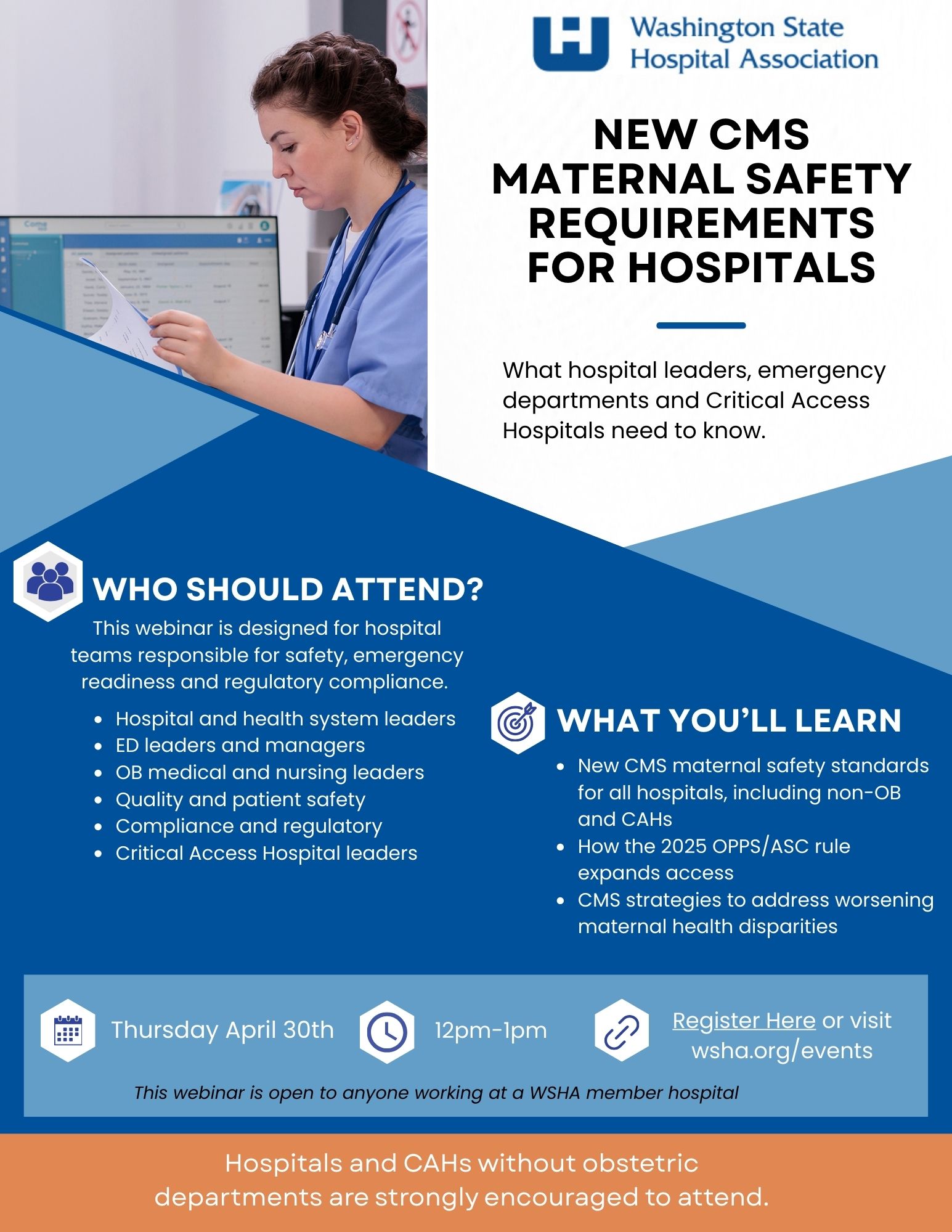
What hospital leaders, emergency departments and Critical Access Hospitals need to know.